Path of Exile 2 Breach Rework: Endgame Mechanics and Crafting Guide
Master the overhauled Breach endgame in Path of Exile 2. Learn how to navigate the Genesis Tree, conquer Hiveborn domains, and defeat the Marshal of Xesht.
Published: Path of Exile 2 Wiki Editorial Team
Table of Contents
Understanding the Breach Rework in Path of Exile 2
The Breach mechanic has undergone a comprehensive transformation in Path of Exile 2, evolving from a simple timed event into a deep, multi-layered endgame system. Centered around the war against the Hiveborn, this rework introduces a dedicated questline, a new crafting economy, and high-stakes domain encounters that provide significant opportunities for character optimization.
In this overhauled system, the core loop remains familiar—opening a rift and defeating monsters—but with critical quality-of-life improvements. Players can now clearly track a progress bar that indicates the remaining time for a Breach. Crucially, your efficiency in slaying demons directly extends the portal's duration, rewarding aggressive playstyles. When you successfully sustain the portal, it stabilizes, transitioning into a second phase where tougher Hiveborn enemies emerge.
The Monastery of the Keepers and the Genesis Tree
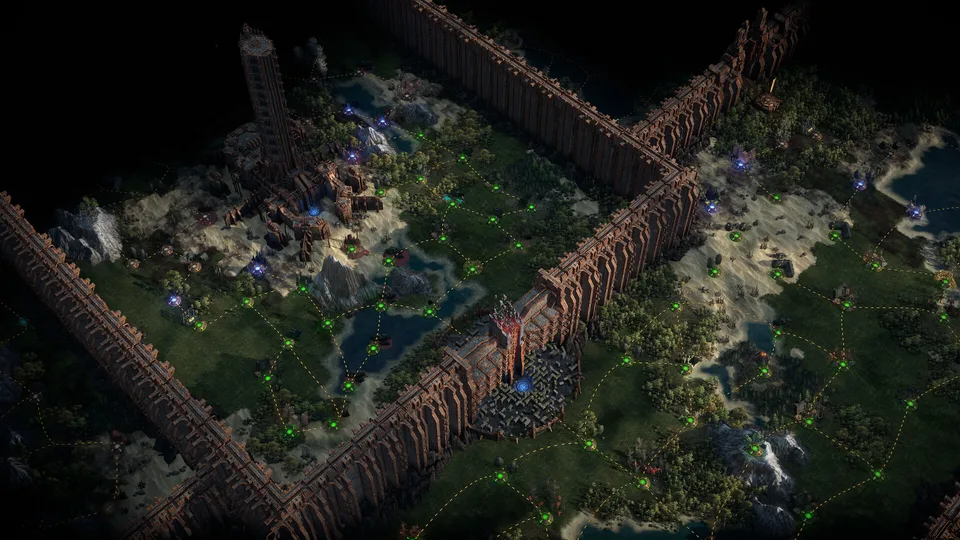
The most significant addition to the Breach ecosystem is the Monastery of the Keepers, located south of your Atlas starting point. This location serves as the foundation for your progression against the Hiveborn. Here, you will interact with the Genesis Tree, a powerful asset stolen from the enemy.
The Genesis Tree acts as the primary crafting station for Breach-related gear. By consuming Hiveblood—a currency dropped by monsters during stabilized Breach encounters—you can unlock nodes on the tree to specialize your jewelry crafting.
Collect Resources: Gather Hiveblood and Wombgifts from stabilized Breaches and Breach Hive encounters.
Allocate Nodes: Spend points on the Genesis Tree to define the base types and modifiers for amulets, rings, and belts.
Birth Items: Place Wombgifts into the tree and fertilize them with Hiveblood to generate rare jewelry with unique implicit modifiers.
Iterate: Use the tree’s branches to refine your desired outcome, such as forcing specific resistance types or increasing the tier of modifiers.
Mastering Breach Crafting and Wombgifts
Crafting via the Genesis Tree allows for unprecedented control over your gear. Unlike traditional RNG-heavy crafting, the tree provides a deterministic path to specific item types. For instance, you can specialize branches to favor caster-oriented modifiers on rings or minion-focused affixes on belts.
One of the most notable features is the ability to create unique base types, such as rings that grant free spirit skills or items with pre-allocated rune sockets. According to community reports, the absence of a respec cost for the Genesis Tree nodes is a major advantage, allowing players to experiment with different crafting configurations without fear of wasting valuable resources.
Tip
The "Currency" branch of the Genesis Tree is particularly powerful for long-term progression. By investing here, you can increase the quality of your crafted items up to 65%, providing a significant boost to your overall power level.
Hiveborn Domains and Pinnacle Challenges
Beyond the standard Atlas encounters, players can now enter dedicated Hiveborn domains by using Breachstones. These zones are home to Breach Hives and Sky Hives, which are significantly more rewarding than standard map encounters.
As you push deeper into these domains, you will face Breachlords like Tul and Esh. Defeating these entities is a prerequisite for accessing the pinnacle boss, Xesht, We That Are One. The encounter with Xesht is designed as a multi-stage challenge where your ability to dodge and manage positioning is paramount.
Warning
Xesht utilizes elemental attacks inspired by the Breachlords—fire meteors, lightning shockwaves, and cold projectiles. Mastering your dodge roll timing is essential, as some of his slam attacks can inflict massive damage if you are caught in the blast zone.
Customizing Your Path with the Breach Atlas Tree
The revamped Breach Atlas Passive Tree offers granular control over how you engage with this content. Whether you want to increase the frequency of Hives appearing in your maps or boost the difficulty of the pinnacle encounter for better loot, the tree provides the necessary tools.
Notable nodes include:
Reactive Hiveseeding: Grants a chance for additional Hives to spawn in nearby maps upon completing a Breach.
Ailith’s Reinforcements: Allows you to call upon Alith for additional support during Hive purges.
Difficulty Scaling: Several nodes allow you to increase the health and damage of the pinnacle boss in exchange for higher-quality unique drops.
Hiveblood is primarily obtained by stabilizing Breaches in the endgame. Focus on killing monsters quickly to keep the Breach open long enough to trigger the stabilization phase, which guarantees better drops.
Can I reset my Genesis Tree nodes?
Yes. The Genesis Tree allows for free respecs. You can click on the nodes to enable or disable them at any time without any currency cost, making it highly flexible for different character builds.
What are Wombgifts used for?
Wombgifts are essential crafting components. When placed in the Genesis Tree and fertilized with Hiveblood, they act as the "seed" for creating specific items, including amulets, rings, belts, and even Breachstones.